You may not realize it, but the skills to teach your child to read are the same you need to teach them to speak. Reading readiness doesn’t start with the alphabet — it starts with talking, listening, and playing. Literacy actually begins way before your toddler enters kindergarten. Before your child starts reading and writing, they need the skills that support those things. If you’re looking to build those early literacy skills, here’s what actually builds a strong foundation before your toddler ever picks up a book on their own.
What Is “Early Literacy” Really?
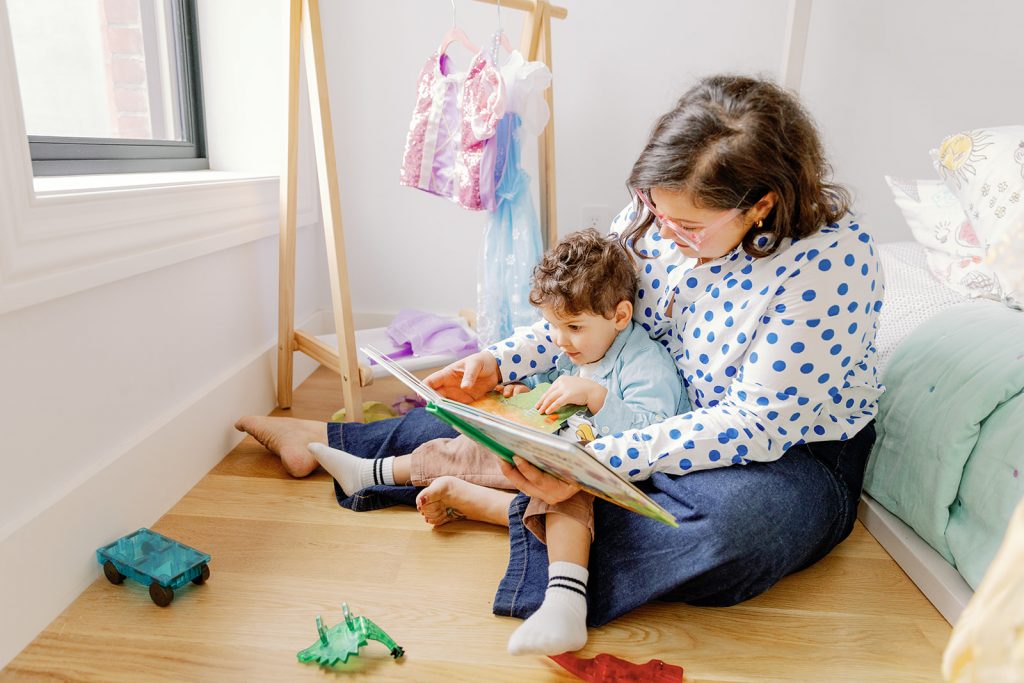
Early literacy is simply the skills that support reading and writing before a child can formally do either. These skills include: Vocabulary, listening comprehension, print awareness, narrative skills, and phonological awareness.
Early literacy is more than just an academic skill set – it’s a speech-language one. Why? Reading and writing are language processes and rely on the same skills toddlers use to understand and produce spoken language. If a child struggles to understand language, they’re more likely to struggle to apply it to reading and writing. Think of it this way: Spoken language is the foundation, and reading and writing are built on top.
The Building Blocks: Skills That Come Before Reading
The skills needed to support early literacy for your toddler come before reading and writing even begins. A few of these are:
- Vocabulary – the more words a child hears and uses, the easier reading comprehension will be later.
- Phonological awareness — noticing sounds, rhymes, syllables
- Narrative skills — following and retelling a story in order
- Print awareness — noticing that words on a page carry meaning
- Motivation and positive associations with books
If you can get a head start on these skills, your toddler will be more than ready to start their reading journey.
Everyday Ways to Build These Skills at Home
There’s no need to wait until your child enters kindergarten to practice literacy. In fact, the home is one of the most important environments for a toddler to feel comfortable building these skills. Here are some examples of what you can do at home to help your toddler build early literacy skills:
- Read the same books repeatedly (repetition builds vocabulary and prediction skills)
- Pause and ask “what happens next?” instead of just reading straight through
- Point out rhymes and silly sounds during play
- Let your toddler “read” to you by narrating pictures
- Talk through daily routines out loud — narration builds vocabulary just as much as books do
When Literacy Struggles Are Tied to Speech-Language Delays
Starting to develop early literacy for your child is necessary for their progress towards reading and writing. When children struggle with language comprehension, their ability to apply it diminishes. Research supports this, showing that kids with language delays are at a higher risk for later reading difficulties.
There’s no need to be scared, just a need to be aware. Some signs to watch out for are: limited vocabulary, trouble following stories or directions, and difficulty with rhyming or sound play.
When it comes to literacy, early is the key word. Early speech-language support protects future literacy by building the necessary skills before your toddler starts reading and writing. This way they won’t fall behind, and they’ll be ready for those book skills when the time comes! These are skills that will follow them throughout their life, so better to start as soon as possible.
FAQ
At what age should my child start recognizing letters?
Letter recognition typically begins developing at ages 2-3 years. They should begin to point out letters on signs and recognize the first letter of their own name. This is often when they start singing the ABC’s and recognizing capital letters.
Do screen-based reading apps help build these skills?
They can certainly be a great supplement, but not a replacement. Shared reading with an adult tends to be the gold standard, because adults will naturally ask questions, explain new words and letters, and can connect the story to the child’s own experiences. The importance is in finding a healthy balance.
Can speech therapy help with future reading skills?
Absolutely. Speech therapy will help a toddler strengthen the communication and comprehension skills needed to support them on their path to successful reading and writing. Speech therapy can be especially beneficial to those still struggling with the foundational skills even after at-home learning.
How do I know if my toddler’s language is on track for literacy?
What matters more than being “on track” is noticing if your toddler is developing the language skills that build the foundation for reading. Going based on age can be tricky, because development has some wiggle room. In general, your toddler is developing good pre-reading skills if they enjoy reading books with you and ask to hear them again, are learning new words, and enjoy songs and rhymes.
The Next Step
If you are noticing some vocabulary or comprehension gaps with your toddler, scheduling an evaluation with a speech-language pathologist may be a good next step to take.
Everyday Language Co.’s Brooklyn-based in-home visits make your child’s eval easy and comfortable. An expert in pediatric speech and language skills, Jocelyn will be able to offer you some peace of mind and, if needed, create a care plan that works for both you and your toddler.
The best time to build a reading foundation is before reading even starts. Please feel free to schedule a quick 15-minute consultation call to get an evaluation and help get your child started with their early literacy skills!




0 Comments