If you’re researching speech therapy for kids and wondering what actually happens during a session, you’re not alone. Many parents are curious about the speech therapy process, and wonder how a speech therapist can collect information during play. You may feel unsure about the evaluation process, want to know what therapy looks like, and learn how speech therapists help children communicate more clearly.
This guide explains what speech therapy for kids involves—from the first appointment to weekly sessions—so you know exactly what to expect.
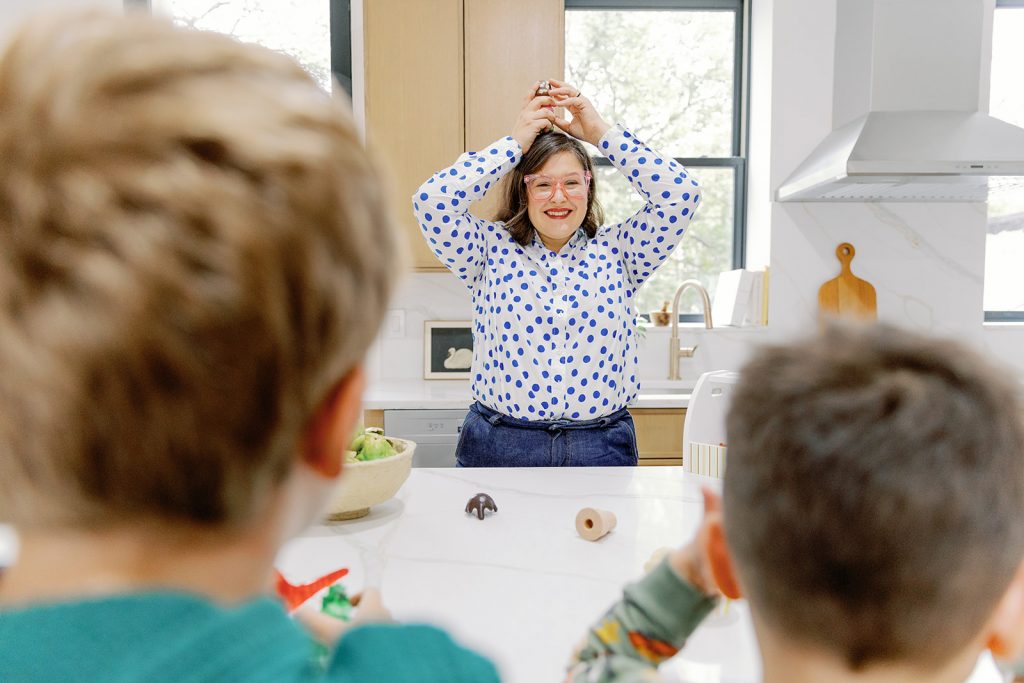
Table of Contents
What Is Speech Therapy for Kids?
Speech therapy for kids helps children learn to use words, understand language, follow directions, and learn language. Sometimes, it helps children learn how to eat a wider variety of foods, or safely swallow. Speech therapy can support kids with:
- Speech sound delays or articulation issues
- Language delays (understanding or using words)
- Stuttering or fluency difficulties
- Social communication issues
- Executive function development
- Feeding or swallowing issues
The purpose of speech therapy for kids is to help each child communicate confidently and with independence, and to empower parents to support their children.
What to Expect at the First Speech Therapy Appointment
The first step in the process of speech therapy is a comprehensive evaluation that helps the SLP understand your child’s communication needs. This includes intake paperwork, a parent interview, observation, assessment and recommendations.
- 1. Parent Interview
During the interview, your child’s therapist will ask questions about your child’s pregnancy, birth, and development. You’ll cover milestones, as well as academic achievements if applicable. This is your chance to give the therapist a full picture of who your child is, and to ask any questions that you have. Depending on the personality of your child, the interview will happen at the beginning of the session or the end of the session.
- 2. Child Observation
As the interview is being conducted, the SLP is also observing your child’s play, interactions, and natural communication skills. This allows the therapist to identify specific areas to test during assessment.
- 3. Assessment Activities
This may include:
- Standardized tests
- Informal play-based assessments
- Checking sound production
- Evaluating vocabulary and comprehension
When working with toddlers, the evaluation process is play-based, meaning the clinician is playing with the child and looking for specific skills, such as following directions, identifying body parts, or asking questions. It also allows the speech therapist to assess play skills and social development. The speech pathologist can then use a formalized scoring tool to give you a clear understanding of your child’s development.
For older kids (3-4 years old and older), more standardized language testing can be used when appropriate, and may occur while seated at a table. These tests look at receptive language (what a child can understand) and expressive language (what a child can say) by using pictures and manipulatives (blocks, puzzle pieces). There are also specific tests that can be used to listen to speech sounds in different word positions to assess pronunciation and patterns of speech sound development.
At Everyday Language Co., we also perform executive functioning assessments that look at a child’s ability to initiate tasks, plan assignments, organize ideas, and execute a plan. These tasks are primarily academic based, but can be turned into play-based assessments, when needed.
- 4. Recommendations & Plan
At the end of your visit, you will have a conversation with the SLP to summarize the visit. The SLP explains:
- The results and findings of the assessment
- Whether speech therapy is recommended for your child
- The goals for treatment sessions
- How often sessions should occur
What Speech Therapy for Kids Looks Like
We love to reassure parents that speech therapy for kids is fun, interactive, and rooted in play. Children always look forward to seeing their therapist and what is in their bag of tricks for the day.
1. Warm-Up & Rapport Building
During this time, the speech therapist will lead your child through songs and movement activities, such as jumping, skipping, or carrying a bag, to help the child feel comfortable.
2. Play-Based Learning
Speech therapists use engaging activities like:
- Pretend play: kitchen, vet, doctor, baby, or toolset
- Games and toys: based on your child’s interest, this can include cars, dinosaurs, animals, etc.
- Books: speech therapists choose books for the season or theme of the session
- Puzzles, stickers, and magnets: these help to promote fine motor skills, as well as language development.
Play is not “just fun”—it’s a powerful tool used in speech therapy for kids to build communication skills or speech sound practice..
3. Targeted Skill Practice
Depending on your child’s needs, a session may include:
Articulation practice
- Working on specific sounds
- Using visual, kinesthetic, and verbal cues
Language development
- Naming objects
- Forming sentences
- Following directions
- Expanding vocabulary
Social communication skills
- Turn-taking
- Conversation practice
- Understanding emotions
Fluency techniques
- Strategies to support smoother speech
- Reducing tension during stuttering
Feeding skills
- Strategies to support smoother speech
- Reducing tension during stuttering
4. Parent Coaching
At the end of the session, the SLP reviews what was practiced and gives easy home strategies to support progress.
How Speech Therapy for Kids Is Personalized
Every child is unique, so speech therapy for kids is highly individualized. SLPs tailor sessions based on:
- Your child’s goals
- Their attention span
- Interests (like dinosaurs, animals, superheroes)
- Cultural and language background
- Family routines
This personalized approach keeps children engaged and builds confidence.
Where Speech Therapy for Kids Happens
We know life is busy (and parking is difficult!), so we come to you. Families can choose the setting that fits their needs:
In-Home Speech Therapy
Home-based speech therapy has the advantage of being the most natural environment, and the place where your child feels most comfortable. When working in home, we can optimize carryover into daily conversations and routines.
School-Based Speech Therapy
If you have more academic-based concerns, or your child is having trouble socializing, we can also attend daycares, preschools, and elementary or middle schools to help support your child within the classroom and work together with your child’s teachers to ensure carryover of skills.
Online Speech Therapy for Kids
Working online is flexible, effective, and ideal for older children or busy families. We make activities fun and engaging, and are able to work with your child when it is most convenient.
How Long Does Speech Therapy for Kids Take?
The length of time your child spends in speech therapy varies. Progress depends on:
- The severity of communication challenges
- Consistency of attendance
- Home practice
- Child motivation
Most speech therapy sessions last 30–45 minutes, once or twice per week. Communication growth happens gradually—but consistently.
Expected Results from Speech Therapy for Kids
Over time, parents often notice:
- Clearer speech
- More vocabulary and longer sentences
- Better social interaction
- Increased confidence
- Less frustration
- Improved academic performance
SLPs track progress and adjust goals as your child develops new skills.
How Parents Can Support Speech Therapy at Home
Your involvement strengthens progress between sessions. Try:
- Talking through routines
- Reading together daily
- Modeling expanded sentences
- Encouraging communication without pressure
- Using playtime as a chance to practice skills
Home practice is a major factor in the success of speech therapy for kids.
Conclusion
Speech therapy for kids is fun, supportive, and tailored to each child’s needs. Whether your child is working on speech sounds, language skills, or social communication, therapy helps them express themselves more confidently.
If you’re considering speech therapy for your child, the best first step is scheduling an evaluation with a licensed speech-language pathologist. Early support can make a lasting difference.




0 Comments